


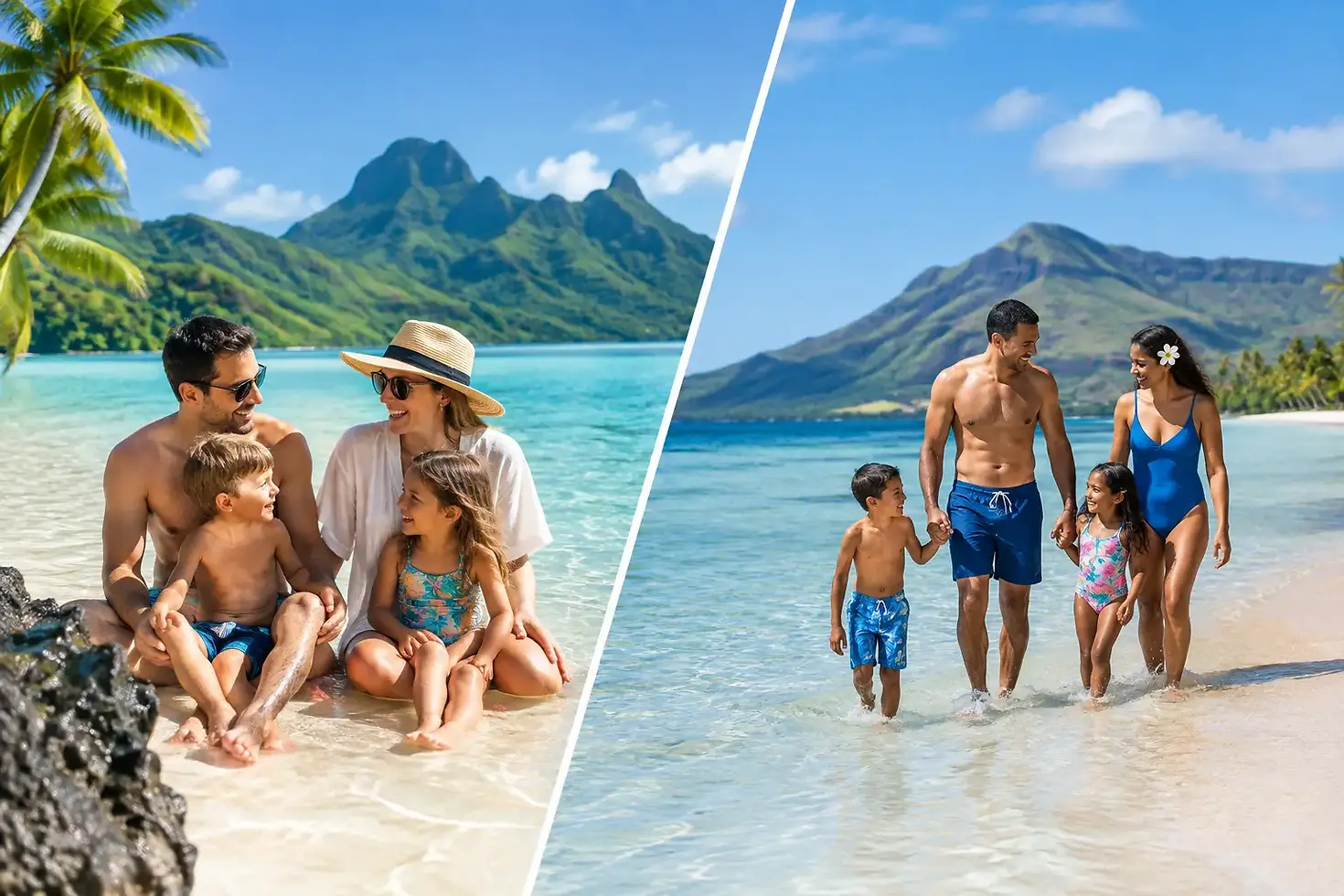
Cook Islands vs Fiji for Families - Which Fits?

A family vacation can be idyllic without being effortless. The lagoon may be warm, the beach may be empty, and the kids may be thrilled - but long flights, a poorly timed connection, or a resort that is not suited to your children’s ages can quickly change the experience. When comparing Cook Islands vs Fiji for families, the best choice comes down to the kind of time you want together: easygoing lagoon days and independent island exploring, or a resort-centered escape with more built-in activities and support.
Both destinations offer welcoming cultures, beautiful water, and a refreshing change of pace from a packed sightseeing vacation. They are not interchangeable, though. The Cook Islands are compact, peaceful, and wonderfully personal. Fiji is larger, more varied, and often easier for families seeking a full-service resort experience.
Cook Islands vs Fiji for Families: The Big Difference
The Cook Islands, particularly Rarotonga and Aitutaki, suit families who want their trip to feel relaxed, local, and lightly structured. Rarotonga has one main coastal road, a calm lagoon, small restaurants, markets, and a friendly village atmosphere. It is a destination where families can settle in, learn their way around quickly, and enjoy a few meaningful excursions without feeling they need an itinerary for every hour.
Fiji has much greater scale. There are large island resorts, private island retreats, mainland properties, and remote outer-island stays, each with a different personality. That variety is a strength for families with specific needs, whether that means a kids club, babysitting, connecting rooms, a water slide, or easy access to snorkeling straight from the beach. It also means choosing the right property matters more.
A useful way to frame the decision is this: choose the Cook Islands for a slower, more independent family holiday; choose Fiji for a wider range of resort amenities and family programming.
Getting There From the United States
For US travelers, routing can be one of the most practical differences. The Cook Islands are commonly reached via nonstop service from Los Angeles to Rarotonga, making them especially appealing for West Coast families. The flight is long, but arriving directly on the main island reduces the number of transitions after an overnight journey with children.
Fiji is also accessible from the United States, with nonstop flights from Los Angeles and connections from other major gateways. Most families arrive at Nadi International Airport on Viti Levu, Fiji’s main island. From there, the next step depends on the resort. Some properties are within a short drive, while others require a domestic flight, helicopter, or boat transfer.
That additional transfer can be part of the adventure, especially for older children who are excited by a speedboat ride to an island resort. For toddlers, babies, or families traveling after a demanding school term, it can also add fatigue. A well-planned Fiji itinerary builds in realistic transfer times and does not try to reach a far-flung island on the same day unless schedules are comfortable.
Beaches, Lagoons, and Time in the Water
The Cook Islands shine for easy lagoon swimming. Rarotonga’s southeast coast has shallow, clear water protected by the reef, making it particularly inviting for younger swimmers and first-time snorkelers. Muri Lagoon is known for its gentle conditions and views of small offshore motus. Kayaks, paddleboards, and glass-bottom boat outings are easy additions to a family day.
Aitutaki takes the lagoon experience to another level. Its water colors are remarkable, and a lagoon cruise can be one of those family travel memories that stays vivid long after the trip. The trade-off is that Aitutaki usually requires a domestic flight from Rarotonga, so it is best added when the family has enough time to avoid making the vacation feel rushed.
Fiji offers excellent swimming and snorkeling as well, but conditions vary more by island and resort. Some beaches are broad and sandy, while others are better for reef access than casual beach play. On certain islands, tides can expose coral flats or make swimming less convenient at particular times of day. This is not a reason to rule Fiji out - it is simply a reason to match the resort to your family’s priorities.
For children who want marine life close to shore, Fiji can be exceptional. Colorful reef fish, soft corals, and guided snorkeling are part of the experience at many resorts. Families with inexperienced swimmers should look for properties with protected swimming areas, supervised activities, and suitable equipment sizes.
Resorts and Accommodations
Fiji generally has the advantage for families who want a traditional resort vacation. Many properties offer family bure accommodations, multiple pools, daily activity schedules, kids clubs, and babysitting. Some clubs are designed for younger children, while others have separate teen programming or cultural activities that appeal to a broader age range. The best resorts make it possible for parents to enjoy a quiet dinner or spa treatment without feeling they have left the family experience behind.
Not every Fiji resort is family-oriented. A number of beautiful properties are aimed at couples or have minimum-age policies, so this is a destination where expert advice is useful. The right fit depends on your children’s ages, your preferred level of activity, and whether you want your accommodations to be the center of the trip.
The Cook Islands have fewer large-scale resorts and less extensive kids programming, but that can be exactly the appeal. Accommodations tend to feel smaller and more relaxed, with self-catering villas, family apartments, and beachfront resorts that encourage families to move at their own pace. A kitchen or kitchenette can be valuable for early breakfasts, familiar snacks, and managing picky eaters.
For many families, a Cook Islands stay feels less like being entertained at a resort and more like temporarily living beside a lagoon. Older children and teenagers often appreciate that independence, especially when the family can walk to a café, rent bikes or a car, and explore beyond the property.
Food, Culture, and Everyday Ease
Both destinations are known for warm hospitality, and both make it easy to introduce children to Pacific Island culture in a respectful, enjoyable way. In Fiji, cultural experiences may include village visits, kava ceremonies, traditional music, craft demonstrations, and Fijian feasts. Resorts frequently organize these events, making participation straightforward.
In the Cook Islands, culture is woven into the rhythm of the islands. Families may encounter local dance performances, markets, church singing, fishing traditions, and community events alongside their regular beach days. Rarotonga feels approachable because so much is close at hand. There is no pressure to schedule a major excursion every day.
Fiji’s resort dining is often convenient, with familiar choices for children alongside local and international dishes. Costs can add up when every meal is taken on property, particularly at remote island resorts. Meal plans may offer good value for some families, but the details matter: check what is included, whether children receive reduced rates, and how much flexibility the plan allows.
The Cook Islands offer more opportunities to mix casual restaurants, grocery stops, food trucks, and resort meals, especially on Rarotonga. That flexibility can help manage a family budget. Availability is naturally more limited than in a major city, so families with allergies or highly specific dietary needs should plan ahead in either destination.
Which Destination Fits Your Children’s Ages?
For babies, toddlers, and young elementary-age children, Fiji can be the easier choice when a family-friendly resort provides childcare, shallow pools, kid menus, and on-site activities. Parents who want genuine downtime as well as family time may find this structure invaluable.
For elementary-age children who love to swim, explore, and try new activities, either destination can work beautifully. The Cook Islands often feel simpler once you arrive, while Fiji provides more organized entertainment and a larger selection of properties.
For teens, the decision usually depends on personality. Social, active teens may enjoy Fiji’s watersports, cultural programs, and resort energy. Teens who would rather paddleboard, rent a scooter as passengers with parents, snorkel in a calm lagoon, and spend unhurried time together may prefer the Cook Islands. Aitutaki is especially rewarding for families with confident swimmers and a sense of adventure.
Budget and Trip Length Considerations
Neither destination is a low-cost beach getaway once international airfare is included, but the way you spend differs. Fiji has options across a broad range, from value-focused mainland resorts to highly exclusive private islands. Transfers, meal plans, and activities should be considered as part of the total cost rather than after the room rate is chosen.
The Cook Islands can provide strong value for families who choose a villa or apartment and enjoy some self-catering. However, the smaller supply of accommodations and flights means popular school vacation periods should be planned well ahead.
For a one-week trip, Rarotonga alone can be an excellent choice because it minimizes transitions. Fiji works well in a week when you select one conveniently reached resort. With 10 nights or more, families can consider adding Aitutaki to Rarotonga or combining a Fiji mainland stay with an outer-island resort.
The right family vacation is not the one with the most activities on paper. It is the one with enough room for everyone to recover from the journey, enjoy the water, and come home with stories rather than exhaustion. Downunder Journeys can tailor the routing, accommodations, and pace around your family’s ages, budget, and travel dates, with the details handled before you leave home.


Comments